

Iron metabolism


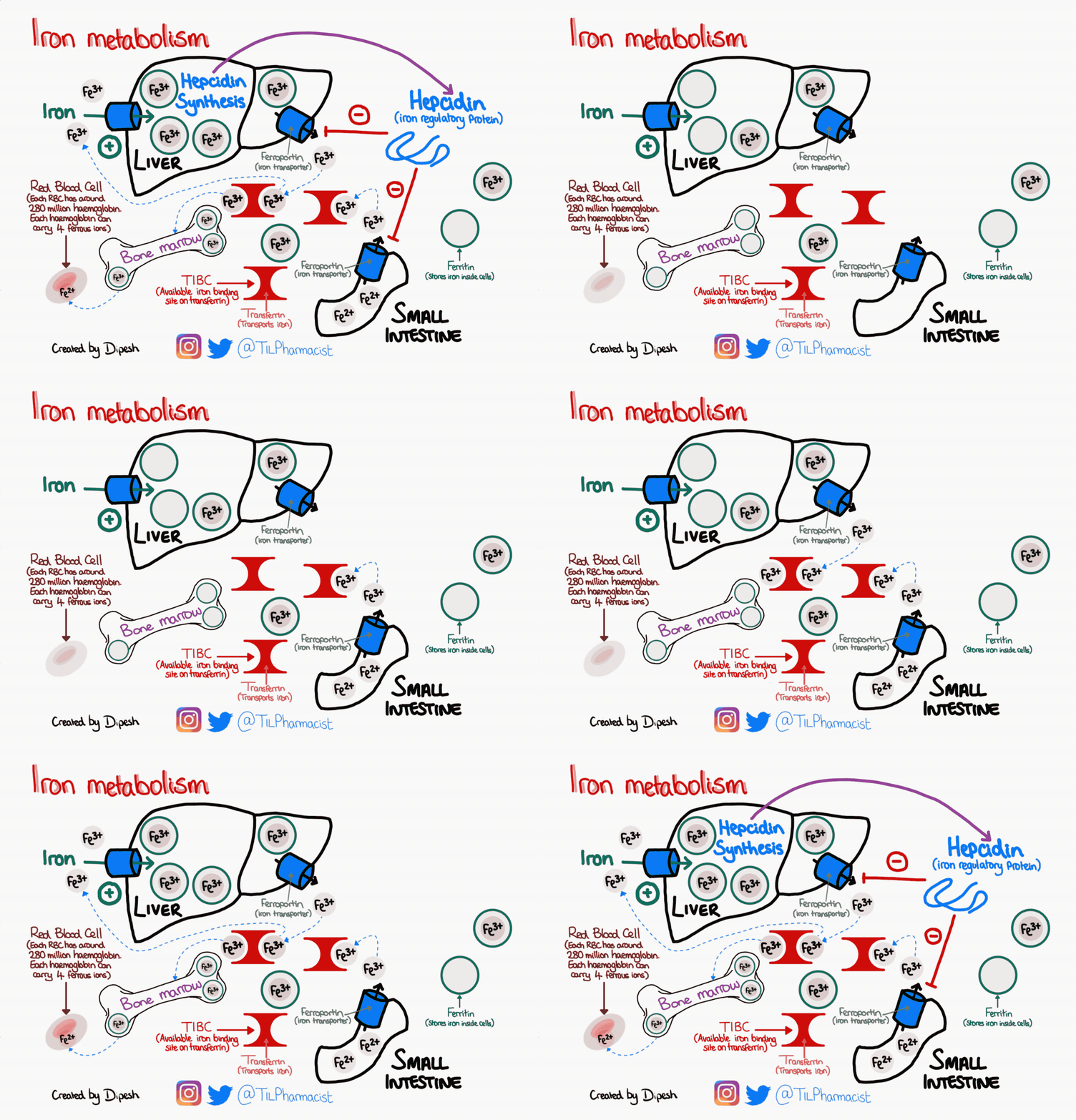
Iron is absorbed via the proximal part of the duodenum. It is transferred into the blood via ferroportin. Once in the blood, iron binds to transferrin. Transferrin levels (measured as total iron-binding capacity, TIBC) increase when iron is low, as the body tries to ‘scavenge’ more iron. Transferrin saturation (TSAT) is the percentage of transferrin binding sites actually occupied by iron. Each transferrin molecule has two iron binding sites (so in this diagram the TSAT is 50% as there are 3 molecules of iron bound to a total of 6 sites). Transferrin carries iron to the bone marrow for red blood cell production and to the liver for storage. Iron is stored inside cells within ferritin molecules. When iron levels are high, the liver produces hepcidin, which degrades ferroportin, blocking further iron export into the blood. Ferritin is the main storage complex and is present mostly in the liver, but also in the bone marrow, spleen, and muscles. Small amounts of ferritin also circulate in the blood. Low levels of serum ferritin are indicative of iron deficiency anaemia (IDA).
References
British Society for Haematology: Guideline for the laboratory diagnosis of iron deficiency in adults (excluding pregnancy) and children (https://doi.org/10.1111/bjh.17900)
BSG Guidelines for the Management of Iron Deficiency Anaemia in Adults (https://doi.org/10.1136/gutjnl-2021-325210)
NICE CKS: Anaemia - iron deficiency (https://cks.nice.org.uk/topics/anaemia-iron-deficiency/)
LearnHaem - Anaemia (https://www.learnhaem.com/courses/anaemia/)
LabTestOnlineUK (https://labtestsonline.org.uk/)